Mostrando entradas con la etiqueta open standards. Mostrar todas las entradas

miércoles, 11 de agosto de 2010

Openness vs Appleness in the smartphone space

Any reader will discover in a quick browse at this blog that we strongly promote "openness" in its many shapes. We think open source software will finally be adopted and promoted by governments and used by more users than proprietary one. We have talked so much about open standards as the right way to store and exchange data. We are involved with the open data community as it is the more needed space in the openness world, and we will announce very soon our plans to support open knowledge more actively.

Perhaps that is why I am frequently asked about the extraordinary success of Apple and its i[whatever] brands when competing against the rest of the world with its more than closed platform. It is really remarkable that markets think that Apple Inc (NASDAQ:AAPL) is the second most valuable company in the world (Apple overtook Microsoft in market capitalization in May 2010). And Steve Jobs is probably one of the biggest business genius in history and an incredible innovator as he has shown several times in his career.

But I think Apple will fail as it did in the 80s when they had the opportunity to dominate the personal computing market with its Macintosh. They decided to play the hardware and software game on their own and refused to collaborate. As a result Intel and Microsoft dominated an incredible growing and profitable market that somehow Apple invented. After a painful decline in 1997 Apple had to be rescued by Microsoft's money to remain independent.

In Apple's platforms third parties have no space and users hardly have any right further than paying every 2 years a lot money for a fancy new device. As far as "appleness" is trendy and apple-fan-boys go on spending 600€ a year in their i-devices, the big hype will work. Yes, hype is the word to define what Apple is living now. An incredibly big hype that openness will end up with. Android will emerge as the winner in the smartphone space simply because its business model and growth is sustainable and iphone's is not. As well as the iPad will enjoy a couple of years of lonely diving, as the prize for the big innovator. Of course Apple will make a lot of money waiting for competitors powered with open sourced platforms as they are doing with the iPhone, but in the end they will not dominate the market they have created.

What I usually say when I am asked for a recommendation, oversimplifying is, "iPhone is cool, but if you plan to use an smart-phone, buy an Android powered one". With Palm acquired by Hewlett Packard, Blackberry looking like a retro device although still in place, Microsoft out of the game and Nokia completely clueless, never an emerging market looked so clear to me.

jueves, 10 de junio de 2010

The Web of Data is here to stay... and will be full of Public Sector Information

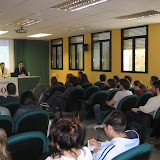
Yesterday I was speaking at the PSI Meeting 2010, that in my opinion was a great success for all the PSI community, which is a very important part of the open data movement. With an excellent organization by Spanish Proyecto Aporta and the European Commission's project ePSIPlaform, many people interested in the reuse of PSI around European Union, and even from Hong Kong, met in Madrid.

It was a very intense day, with 19 thoughtful speeches made by people coming from public administrations (including European Commission) and platforms, companies that reuse information and Trade Associations representing their interests and civil society organizations. I was specially impressed by the honest description of how some civil servants face the unlocking of their own data made by Catherine Lippert; the didactic description of open data picture and issues presented by Daniel Dietrich and the inspiration of the examples and replicas made by Chris Taggart.

But I am also worried about the strength that the business case trend is taking. Many voices, including the European Commission are asking to measure something that it is not possible to measure for the moment. I would say that if a company is willing to make an investment to develop a business model based on the reuse of a certain PSI, that should be enough proof of usefulness. If it doesn't work the only one who will lose is the company who is taking the risk. The information is being produced anyway and we should not ask the public bodies to over-engineer the formats or to build easy to use and expensive to exploit APIs. At least for the moment and at least during economic downturn. That can be part of the investments the companies can make. So please RAW DATA NOW!.

With these conditions, the business case will be built by itself in a few years for very little money. Because what we know for sure is what Marc de Vries said about the direct relation between access and reuse "No access, no reuse". And information industries need the raw material that represent raw data to innovate, specially as an stimulus for the recovery. It is not that difficult and I really think it is not that expensive. It is more a matter of will by the information holders.

There were many take-aways from all the presentations and round tables, so I recommend you to read the tweet stream of the PSI Meeting 2010, where you will find many of them. You will discover that many of the speakers are also twitterers and you can follow their activities on open data. And that in the public sector, even in Spain, there are many people like Alberto Ruiz de Zárate or Amalia Velasco that can make things happen.

For me the best part was to see that there is great group of brilliant people that are really committed to the objective of making Public Sector Information open and reusable for the benefit of citizens and businesses. And as usual in big causes, the best of them are volunteers. For the first time since I am following the open data community I really have the feeling that we are not very far from a big domino effect (as Catherine defined) that will make great things to happen... despite the business-casers.

sábado, 14 de marzo de 2009

When the web was backed up on a floppy disk

On Friday afternoon, CERN celebrated the 20th anniversary of the moment were the web was born. The document "Information Management: a Proposal" that sir Tim Berners-Lee handed to his boss in March 1989, and his approval to go forward with his vague but exciting proposal, triggered the development of one of the most successful inventions of the human history.


The decision of making web technologies available free of charge as open standards through World Wide Consortium has probably been the most important factor impacting success and global adoption of the Web. I hope that all those, who are trying to lock nets, protocols and user's rights, or applying unfair taxes to its free use, take a comprehensive look back at history and ever understand the damage they are causing to all of us.

I'd like to post the video with the celebration that the CERN webcasted on Friday but I'm afraid it is not still available or at least I have not been able to find it, except as a pay service at euronews.net.

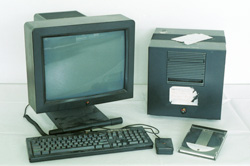
You can find there curiosities like the original computer used as the first web server, browser and editor (they even connected it to a projector!!!), their first thoughts on things like the first browser address bar, (which they did not thought it would be useful), or the opinions of the original team about the unfortunate name they gave to the WWW (they are still regretting it)

And my favorite one. They explained how Tim Berners-Lee usually stored the whole world wide web on a floppy disk because he was not confident of corporate back ups.

The video contains several funny pearls especially for all those, like myself that have been passionate about the Web this last 20 years; and perhaps tried to contribute a bit to the development of this extraordinary vehicle for innovation, communication and collaboration that is even changing some principles of world economy and business models ... bringing us the so-called open economy.

Happy 20th birthday World Wide Web!!!!! ...